Meet Ingrid: supporting mental wellbeing on the Redcliffe Peninsula
Meet Ingrid, a counsellor with Peninsula Community Support, and learn how free, accessible counselling is helping people on the Redcliffe Peninsula feel supported through life’s challenges.
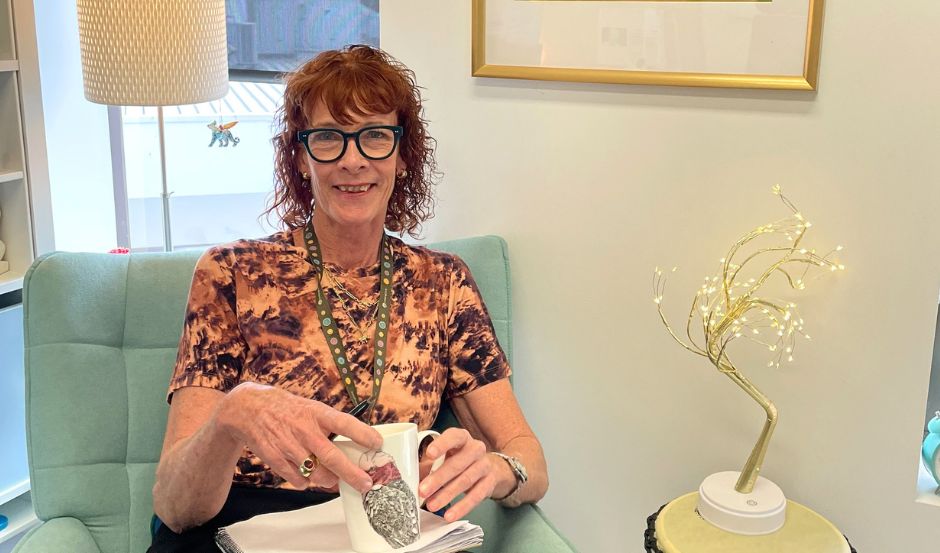
For Ingrid, counselling is about connection, curiosity and creating a space where people feel heard. As a counsellor with Peninsula Community Support (PCS) on the Redcliffe Peninsula, Ingrid provides free counselling to adults in the local community. No referral or mental health care plan is needed, and people can access support for as long as they need it. We spoke with Ingrid about what led her to counselling, what she finds most meaningful about the work, and the moments that remind her why accessible mental health support matters.
Tell us a bit about yourself.
I am a counsellor on the Peninsula Community Support (PCS) program, which is based in Redcliffe. I provide counselling to individual adults and couples and I’ve worked at UnitingCare for just under two-and-a-half years. I’m the only PCS practitioner so the service probably reflects my integrative approach to counselling and a focus on personal and empathic care for clients.
Prior to training as a counsellor (in my early 50s), I worked in tertiary education. I was at the University of Queensland for over 10 years where I worked as a learning adviser. Before this I worked as a teacher/lecturer in applied linguistics at QUT in Brisbane, at the University of the Witwatersrand in Johannesburg (South Africa), and at the University of Regensburg (Germany). All of my work roles have had one thing in common – they’ve entailed supporting youth and adults at different stages in their lives, and from a range of cultural backgrounds, to reach their potential, grow and learn.
What is your role and what does your day to day look like?
PCS offers between four to five counselling sessions a day (Monday to Thursday) to individual clients (between the ages of 18 and 84) and to couples who live on the Redcliffe Peninsula. Clients generally attend sessions on a fortnightly basis and we do offer longer-term support when appropriate.
Clients and I work on addressing goals we’ve formulated together and these are reviewed every three months or so. The program also offers evening sessions and telehealth and online sessions.
In-between sessions I do research and training that provides me with fresh perspectives that inform my counselling practice.
What led you to pursue a career in your field?
I think my desire to contribute to the quality of people’s lives and to have meaningful inter-personal communication have led me to this profession. My curiosity and fascination for relationship dynamics is integral to this. I love people’s stories and never fail to find my clients’ narratives absorbing.
What inspired you to join UnitingCare and what keeps you passionate about your work?
UnitingCare’s reputation as a trustworthy health-care provider and supportive employer was a strong drawcard for me and I was impressed that PCS offered free counselling support to the local community. I sensed I could retain a degree of autonomy and independence in my role and I was also attracted to the fabulous work environment; most PCS clients comment on how much they appreciate our bright and welcoming counselling room.
I remain passionate about my work because I feel appreciated and valued by UnitingCare and my colleagues are a pleasure to work with – they’re fun, supportive and enthusiastic; we share many values and professional interests.
As long as I remain curious, I will never run out of passion. I’m grateful that every day is interesting, varied, and challenging. There’s never one way of doing things, seldom a dull moment, no day is ever the same, and I learn as much from my clients as I hope they learn from me.
Can your team share a memorable moment that highlights the impact of your work at UnitingCare?
A hard-working client of mine who has bipolar disorder recently told me that he presented his own testimony to the Redcliffe Uniting Church community on Sunday and he has given me permission to share it here. During his testimony, he spoke about how his counselling with PCS has supported him to heal from his divorce, work on forgiving himself and others, learn to accept and recover from a cancer diagnosis, and grow in confidence. He would never have spoken in public when I met him in 2024 because he wouldn’t have drawn any attention to himself - he would have experienced too much self-doubt, fear of rejection and social anxiety to do so. He has recently started to volunteer his services at the church. Rather than focusing on his own insecurities, he now strives to utilise his skills to support others. He makes new members of the congregation feel welcome and recognises the importance of encouragement and friendliness in building community.
What do you get up to when you're not at work?
Outside of work I am a Mum, mad potter and a great enthusiast of physical fitness. I love critters of all sorts, adventure, being in nature, and reading. I indulge in a range of crazy, creative endeavours (such as making wind chimes from sea glass), and practise Yoga Nidra for restoration. I probably annoy the neighbours some by cranking up the music whilst dancing in the kitchen.
Find support on the Redcliffe Peninsula
Peninsula Community Support provides free counselling to adults on the Redcliffe Peninsula. No referral or mental health care plan is needed, and people can access support for as long as they need it.
If you or someone you know could benefit from having a safe, supportive space to talk, find out more about Peninsula Community Support and how to access the service here.
A big thank you to Ingrid for sharing her story, her reflections on counselling, and a glimpse into the work happening through PCS.